Across the Complete Disaster Management Cycle
Joti Foundation is a youth-led, women-led disaster resilience non-profit organisation focused on saving lives, strengthening communities and building resilience across the complete Disaster Management Cycle. The cycle includes Prevention and Mitigation, Preparedness, Response and Recovery. Guided by the belief that every minute matters during a disaster, JF works to empower and equip local youth to become first responders capable of delivering timely rescue and relief starting from the critical 24 hours after a disaster, while bridging the physical connection needed to reach disaster-affected communities.
Flood Response, Punjab
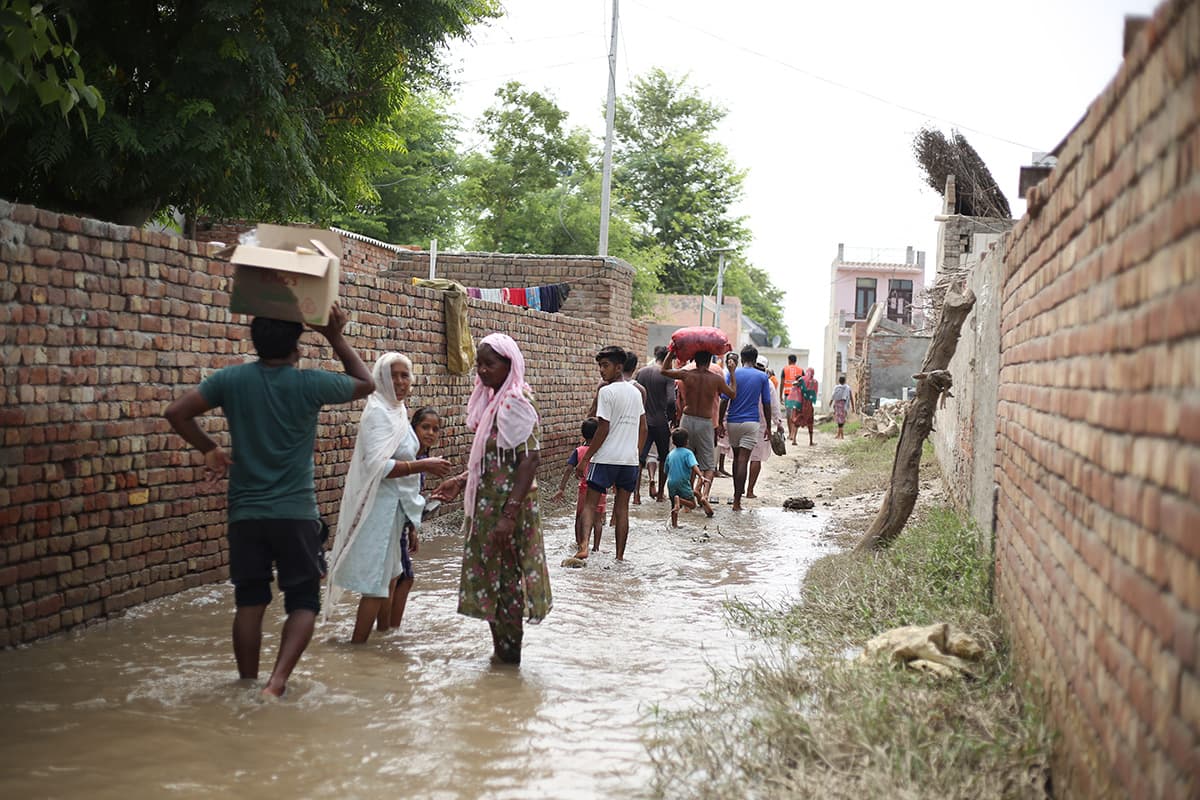
Families moving belongings to higher ground as water enters the village.
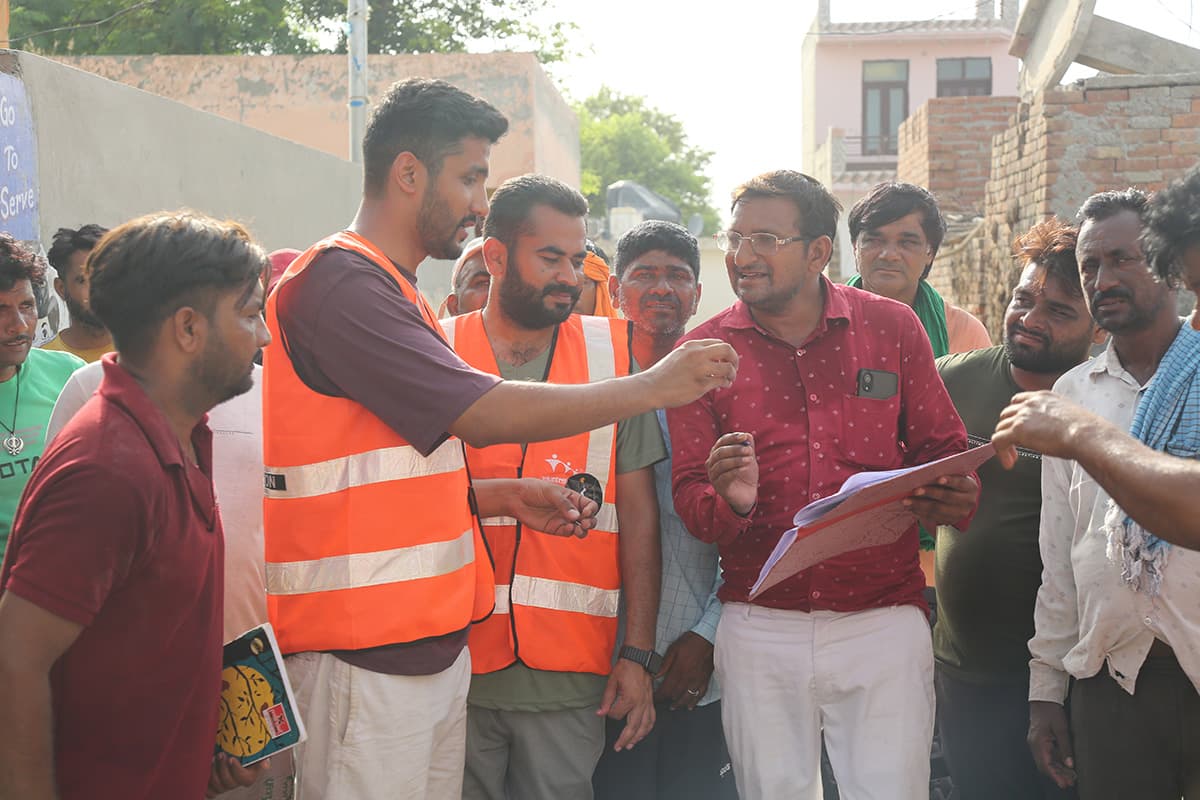
Assessing need house by house so relief reaches the families worst hit.
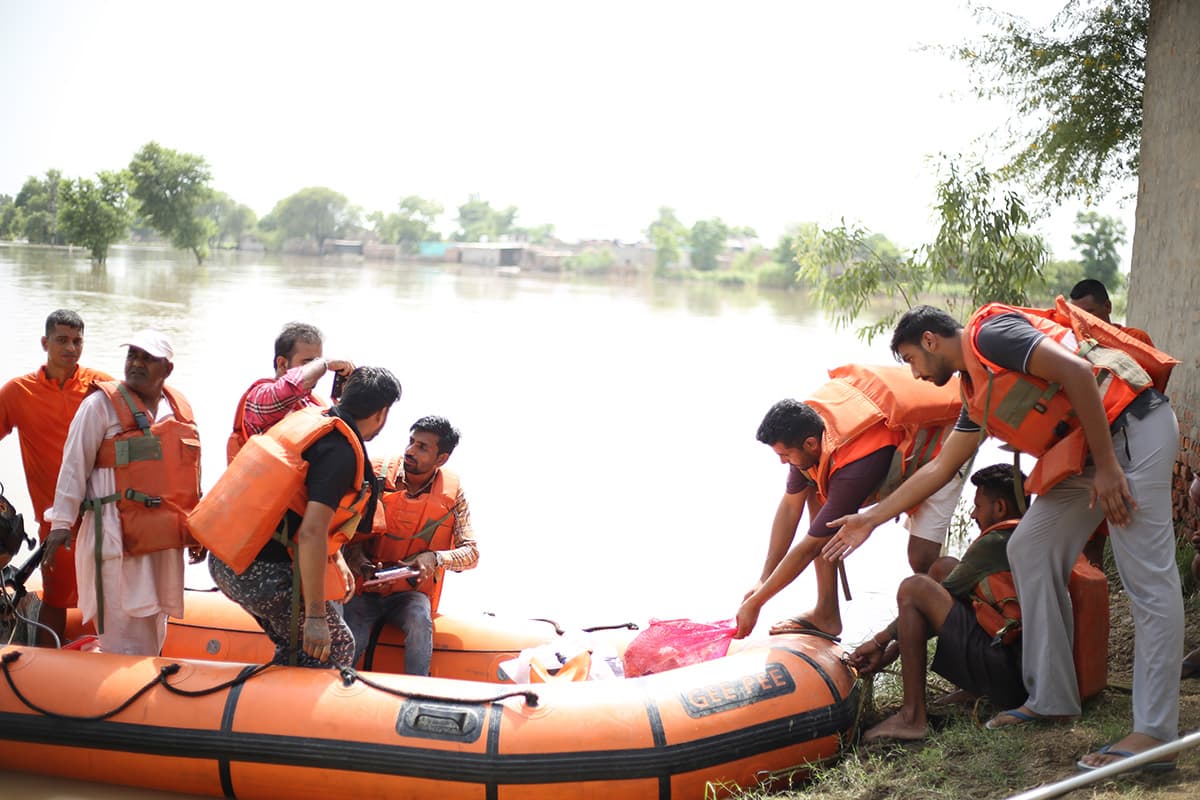
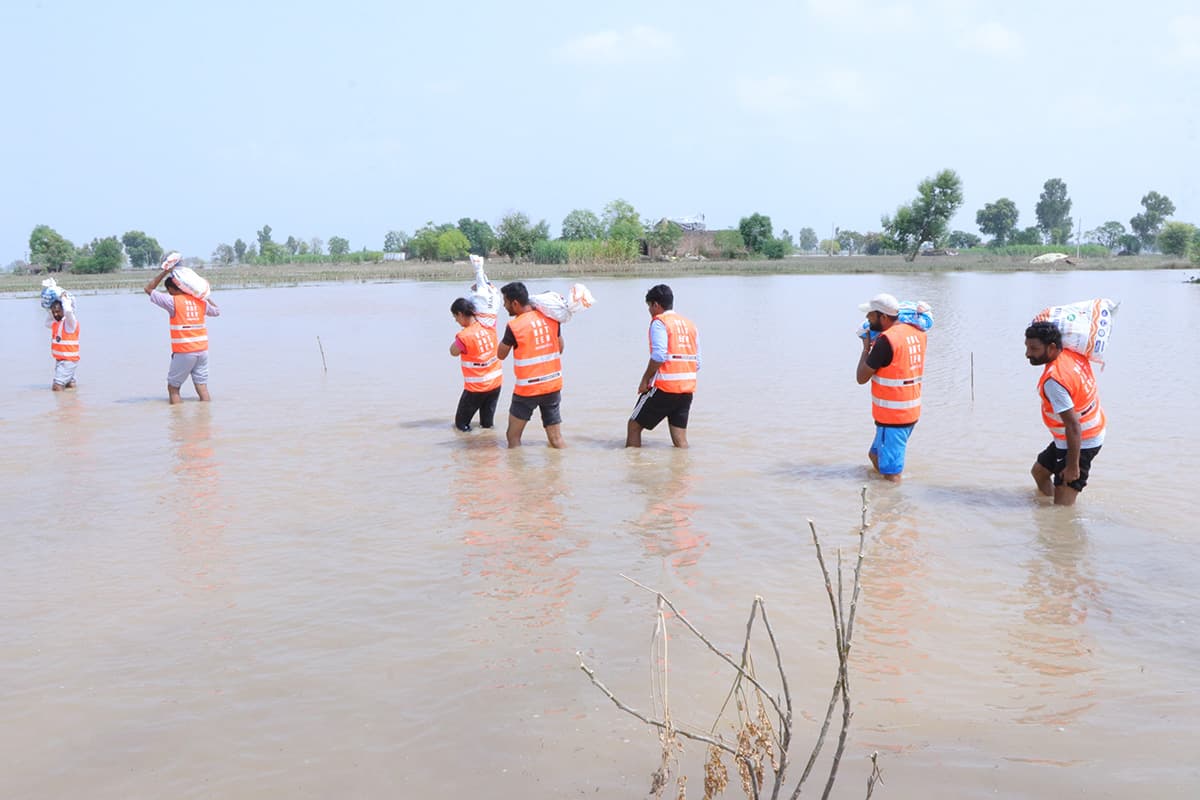
Loading a rescue boat bound for villages cut off by the water.
One of the Worst Humanitarian Crises in the Indo-Pak Border Belt
Floodwater cut off villages along the border, submerging farmland that families depend on for the year ahead. Joti Foundation responded in the first hours and stayed for the months that followed.
The Scale of the Crisis
- Border Villages Affected
- 20
- People Directly Affected
- 13,000+
- Acres of Farmland Submerged
- 10,000
- Households Damaged
- 3,309
- Homes Fully Destroyed
- 140
What We Did
- People Reached
- 25,000+
- Days Continuous Rescue
- 25+
- Relief Kits
- 4,500+
- Children Back to School
- 3,430
- Families — Sanitation
- 3,000+
- Evacuated (Elderly & Livestock)
- 1,000+
- Villages Sanitised
- 20
- Medical Camps
- 4
50+ trained volunteers deployed across flooded border villages using motor rafts, reaching households that no other responder could get to.
Build Back Better
Relief ends when the water recedes. Recovery is the longer work of rebuilding homes, land and schooling so the next flood does less damage than the last one.
Homes Rebuilt
Flood-resilient shelters with elevated plinths, improved drainage, safe kitchens and sanitation units — settling around 320 individuals.
Schools Reopened
Classrooms restored from silt, playgrounds cleared and solar lights installed — 3,430 children back to learning.
Homes Assessed
Full structural assessment of flood-damaged homes to identify families for reconstruction under Phase 1 and Phase 2.
Acres Restored
Farmland reclaimed through dewatering and desilting, then re-sown for the next season — 20,000+ individuals benefitted.
Villages — WASH Support
Bleaching powder and sanitisation drives across every affected village, with volunteers engaged in rescue, health and recovery.
Volunteers Mobilised
Community mobilisation and equitable distribution of resources, fostering long-term resilience in border communities.
Cold Wave 2026
Acting ahead of a forecast hazard costs a fraction of responding after it. Before the coldest weeks of the year, we worked with border villages in Fazilka to get warnings and insulation to the households least able to withstand them.
Stakeholder Consultation & Social Mobilisation
Village Sarpanches, ASHA workers, Anganwadi workers, school teachers and community leaders engaged across 10 villages.
Early Warning Dissemination Groups
10 EWIDGs formed, one per village, to receive IMD alerts and pass cold wave warnings on to every household.
1,958 Individuals in Awareness Sessions
19 sessions covering cold wave risks, insulation techniques, safe heating, layered clothing and protection of the elderly and children.
Insulation Support Kits for 10 Vulnerable Households
Bubble insulation sheets, canvas tarpaulins, green shade nets and mink blankets for the most economically vulnerable.
Existing Programmes
Roshan Punjab
Roshan Punjab is Joti Foundation's flagship children's eye health programme that strengthens long-term resilience by improving children's vision and learning outcomes. The programme screens school-going children for vision impairments, trains teachers to conduct basic screenings, promotes self-testing through visual charts in schools and facilitates the provision of spectacles where required. Implemented in partnership with the Government of Punjab, the programme has already reached approximately one million children, helping them build healthier and more resilient futures.
Flood Response
Flood Response is JF's emergency response programme focused on delivering life-saving rescue and relief during the critical first few hours of a disaster. Through trained youth responders, rescue boats and close coordination with NDRF, SDRF and local authorities, JF bridges physical access barriers to reach isolated communities and ensure timely assistance when every minute matters.
Climate Action
The Climate Action programme strengthens community resilience by promoting groundwater conservation, sustainable water management and climate adaptation measures. The programme supports corporates and communities to better prepare for the increasing impacts of climate change through awareness, local action and practical solutions that protect natural resources and strengthen long-term water security. Jal Jeevan aims to improve access to safe and sustainable drinking water in vulnerable communities, promoting water security through community-based solutions, awareness, infrastructure support and partnerships with local institutions.
Joti Foundation believes that every life can be saved when communities have timely access to rescue and relief and are empowered to build resilience before, during and after disasters.
Local youth are often the first people present when disasters strike and are uniquely positioned to act immediately, particularly in remote and hard-to-reach locations where external responders may take time to arrive. By strengthening local capacities before disasters occur and embedding youth-led response systems within communities, JF can complement government efforts and create sustainable, locally owned disaster resilience systems.
Where We Work
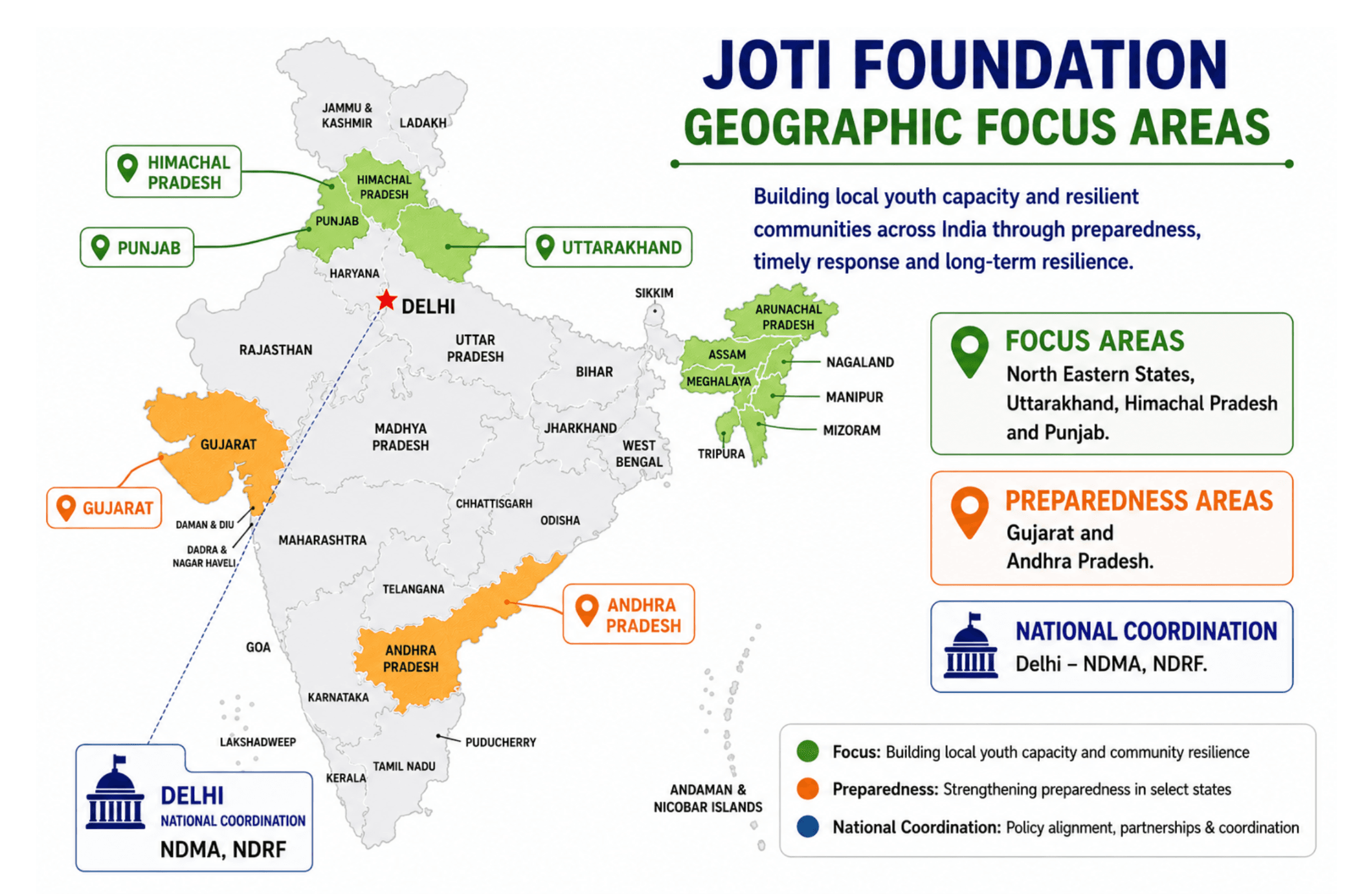
Over the next decade, JF will prioritise intensive work in four disaster-prone focus regions. In parallel, JF will undertake preparedness interventions in additional states, with the flexibility to elevate these states to focus areas as needs and capacities evolve.
Five Strategic Goals
Local Disaster Response Systems
Establish and sustain at least 1,000 local Youth Response Units (YRUs), 400 Circle Quick Response Teams (CQRTs) and 2,000 Village Disaster Management Committees (VDMCs) across the disaster-prone districts in India by 2036.
Timely Search, Rescue and Relief
By 2036, ensure that all JF-supported districts have trained youth response units capable of delivering life-saving rescue and relief within the first 24 hours of a disaster through a national network of YRUs (approximately 5,000 youth).
Climate-Resilient Communities
By 2036, build resilient communities in at least 50 disaster-prone districts by implementing programmes across all four phases of the Disaster Management Cycle: Prevention and Mitigation, Preparedness, Response and Recovery.
Disaster Management Policies and Systems
Assist policymakers in refining Disaster Management policies annually by bringing grassroots lessons and innovations to the decision-making table.
Strategic Partnerships and Resource Mobilisation
By 2036, establish strategic partnerships with government agencies, CSR partners, philanthropic institutions, national and international foundations and communities to mobilise sustainable resources that strengthen JF's long-term impact and institutional resilience.